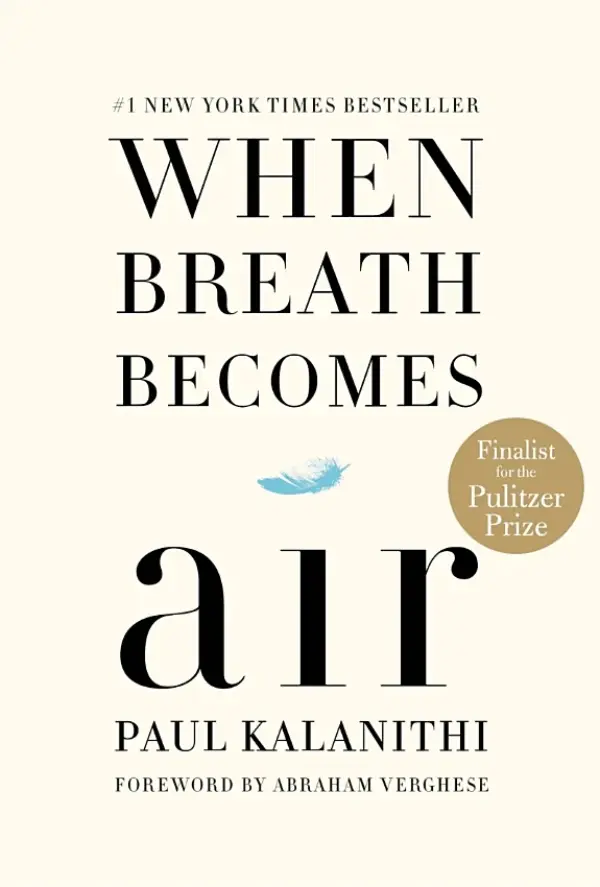
When Breath Becomes Air
There is a moment, a cusp, when the sum of gathered experience is worn down by the details of living. We are never so wise as when we live in this moment.
I had come to see language as an almost supernatural force, existing between people, bringing our brains, shielded in centimeter-thick skulls, into communion.
I began to see all disciplines as creating a vocabulary, a set of tools for understanding human life in a particular way. Great literary works provided their own sets of tools, compelling the reader to use that vocabulary.
inured to it. Drowning, even in blood, one adapts, learns
Pretty tasty, I thought, picking chocolate chips out of my teeth as the family said its last goodbyes. I wondered if, in my brief time as a physician, I had made more moral slides than strides.
The days when someone was simply “killed in a car accident” were long gone. Now those words opened a Pandora’s box, out of which emerged all the images: the roll of the gurney, the blood on the trauma bay floor, the tube shoved down her throat, the pounding on her chest.
I had met her in a space where she was a person, instead of a problem to be solved.
Openness to human relationality does not mean revealing grand truths from the apse; it means meeting patients where they are, in the narthex or nave, and bringing them as far as you can.
Those burdens are what make medicine holy and wholly impossible: in taking up another’s cross, one must sometimes get crushed by the weight.
“A little learning is a dangerous thing; / Drink deep, or taste not the Pierian spring.”)
What patients seek is not scientific knowledge that doctors hide but existential authenticity each person must find on her own.
Because I would have to learn to live in a different way, seeing death as an imposing itinerant visitor but knowing that even if I’m dying, until I actually die, I am still living.
offered a more coherent cosmos. Surely Occam’s
Graham Greene once said that life was lived in the first twenty years and the remainder was just reflection.
The future, instead of the ladder toward the goals of life, flattens out into a perpetual present. Money, status, all the vanities the preacher of Ecclesiastes described hold so little interest: a chasing after wind, indeed.